Answers to Your Pool & Backyard Questions

Explore common questions about pool installation, cost, and backyard design.

Gunite pool construction

Gunite pool construction involves multiple phases. After planning and designing the pool, these steps typically include: permitting, layout, excavation, steel installation, plumbing, electric, gunite application, installation of tile and coping, deck installation, plaster/interior finish, and start-up.

The sequence here may vary based on local building codes and practices, as well as if the project contains any specialized custom design features.

With normal backyard conditions and weather that allows for the construction to proceed, builders in many areas of the country usually need eight to 10 weeks from excavation to complete a typical residential gunite pool.

In some geographic markets, build times average a few weeks longer. In general, the more complex the design and the more special features it has, the more time your project will take.

Other variables often extend build times. Among them: time of year, permits/variances, difficult building conditions (e.g., property access, hitting groundwater, subterranean rock, or unmarked utility lines), addendums to change the design or features customer payment progress adjacent outdoor features under construction, and custom material choices requiring a special order.

Above all, weather conditions, such as rain or extreme heat and humidity, can cause delays.

Gunite construction is multiphase—requiring a series of steps using various tradesmen for each. Reputable pool builders adhere to the timelines and terms outlined in the sales contract.

Beneath the ground, several conditions can slow or impede pool-construction.

Examples include underground rock, extended tree roots, a high local water table (in which water from the earth seeps into an excavated hole), and buried utility lines that utility-reporting services did not identify. While qualified pool contractors use strategies to overcome most of these subterranean hurdles, build-schedules often must be extended.

Learn more: Backyard Conditions that Impact Building Costs

Soil that expands, contracts, shifts, or is unstable for other reasons can impact a pool’s construction and long-term stability.

For example, in an open excavated hole, sandy soil may cause the walls to collapse. Soil with a high clay content may expand or contract with seasonal temperature or moisture changes.

Professional pool contractors are accustomed to these kinds of challenges and have solutions for the majority of them. Tactics vary by the nature of the challenge and building practices in the local market.

Learn more here: Backyard Conditions that Impact Building Costs

Gunite Design Basics

A gunite pool is built with a concrete blend that consists of sand, cement, and water. (Shotcrete is a similar blend, but also contains pea gravel.)

Construction crews spray the material through a high-pressure air hose onto a reinforcing network of steel bars to form a thick, rock-hard pool shell.

Both gunite and shotcrete pools are engineered concrete creations that provides superb design flexibility and lasting durability.

Learn more about construction elements of a gunite pool: 5 Key Construction Terms for Concrete Designs

Gunite pools offer many advantages. Unlike their fabricated fiberglass or vinyl liner counterparts, they are custom designed to your specifications and built to capitalize on unique variables in your backyard.

Gunite pools offer maximum creative freedom and visual appeal. Builders can form virtually any size, shape, depth, and multilevel configuration.

A gunite design can seamlessly and more easily include a wider array of decorative and functional features than you can have in a vinyl or fiberglass pool.

Engineered to last for decades, gunite pool shells boast an engineered network of steel reinforcement that makes them the industry standard for strength and longevity.

Learn more:Affordable Custom Pool Style

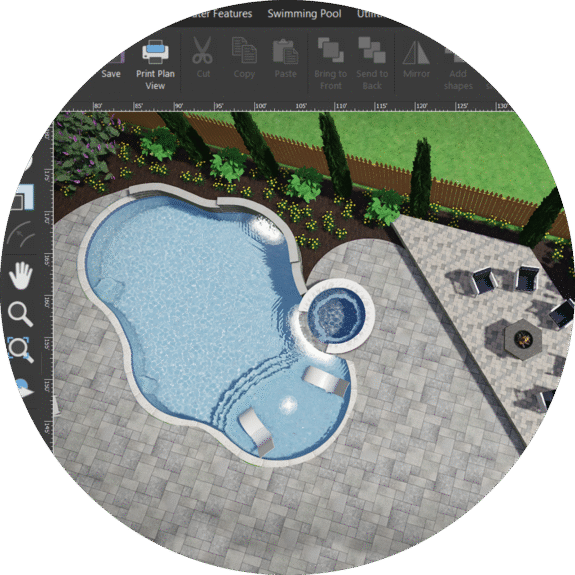
When you invite a designer to your home for a gunite pool estimate, he or she will begin by measuring your backyard and conducting a general survey of your overall property.

The designer will ask about your vision for your new backyard. He or she will discuss available options such as pool shape, dimensions, design features, the inclusion of a spa, finish materials, and various high-tech equipment options that help automate care and save water and energy.

After learning how your family plans to use the pool, your lifestyle preferences, any special requests you may have, backyard conditions, local building regulations, and your overall target budget, he or she will create a custom pool plan for this array of criteria.

For some basic pools and popular shapes, your designer may create the general plan during this initial meeting. In most cases, he or she may advise that additional time is needed to prepare a plan for your review at a later date.

If you would like to consider a pool loan, your designer can also share information about financing programs (oac.).

Click here to request an appointment for a Blue Haven in-home pool estimate.

Swimming Pool Cost & Pricing

Because gunite pools are custom projects—each with unique specifications and site conditions, and built with materials and craftsmen that vary by markets around the country—it’s very difficult to cite an average cost.

One major consideration will be whether or not the project includes a spa. This popular feature may add around 15 to 25 percent of the cost of the basic pool.

Other determining factors that affect the final price include size (often measured in perimeter feet), depth, shape, design elements, functional features, equipment and technology options (e.g., pool automation), material choices, accessories (e.g., a pool slide), local construction costs, local labor costs, and specific backyard building conditions.

By speaking to local pool builders and providing some general specifications, you will develop a sense for the typical starting pool prices in your area.

Learn more:
3 Reasons Swimming Pool Builders Should Never Cut Corners

Property conditions that drive pool-building costs include: access to the backyard for heavy equipment, slopes and elevation changes, various soil conditions, and any underground obstacles.

Other variables range from overhead utility lines to stringent local building codes.

Swimming Pool Loans & Financing

Yes, sources are available for pool loans, and some pool builders help arrange pool financing for buyers.

Blue Haven offices draw on a national network of home-improvement lenders to help clients obtain financing (on approved credit). Programs vary state by state, and lenders have different underwriting criteria.

To check your creditworthiness for a pool loan, the best approach is to begin with a credit evaluation. Ask your pool builder if you can complete a single or joint application to run a free credit check for review.

A finance specialist can evaluate the credit report for your overall creditworthiness, and he or she can look for lenders with criteria that best aligns with your credit profile.

Some of the factors taken into consideration include your FICO score, debt-to-income ratio, and amount of unsecured credit.

Learn more about Blue Haven pool financing, and view an online credit review form.

Inground Spas/Gunite Spas

Gunite spas are custom builds that are popular among pool buyers because they serve as a lovely focal point in the pool and offer so many health and lifestyle benefits.

Particularly when the spa is elevated, its façade and spillway provide superb design opportunities and also serve as a distinctive water feature.

Beyond its beauty, a spa brings added value to your lifestyle. It’s an ideal amenity for unwinding mentally and physically, offering warm hydrotherapy for sore muscles, a place for low-impact exercise, support for enhancing blood circulation, promotion of better sleep patterns, general relaxation and serenity, and a setting for socializing and conversation.

This feature also provides a fun spot to hang out or play—even when it’s cooler at night or after swim season ends. Learn more about gunite spas and design ideas: Custom Inground Spas

The most popular gunite spa shape is circular, since a circle or a rounded shape makes conversation and interaction easy. These shapes are also most efficient for holding the most people.

However, some pool buyers opt for custom geometric options with straight lines—squares, rectangles, triangles, or modified versions of them. Other custom designs may incorporate curves and organic shapes.

Pick a custom spa shape that complements your pool shape and style. Many choices are available, from bold geometric silhouettes to organic free-form shapes.

If you plan on having lots of family and friends in the spa, remember that most shapes do not seat a crowd as efficiently as a circle. Ask your pool designer for suggestions.

Learn more: Gunite spa shapes: Picking the right one for your pool design

Backyard Space/Considerations

Building Materials

Three kinds of materials are used to produce in-ground pools: vinyl liner, fiberglass, and gunite (concrete/shotcrete).

On a gunite pool, entry steps are built like the rest of the pool using either gunite or shotcrete applied over steel bars. (If you have heard of plastic steps, it would have been in reference to a vinyl liner pool.)

Swimming Pool Shapes, Dimensions, Depths

Gunite Pool Construction at a Glance

Watch a broad overview of the phases involved when building a concrete (gunite/shotcrete) pool. Based on local site conditions, code compliance, environmental factors, and other variables, there may be variations in materials and/or construction techniques used.

Locations Get A Quote