
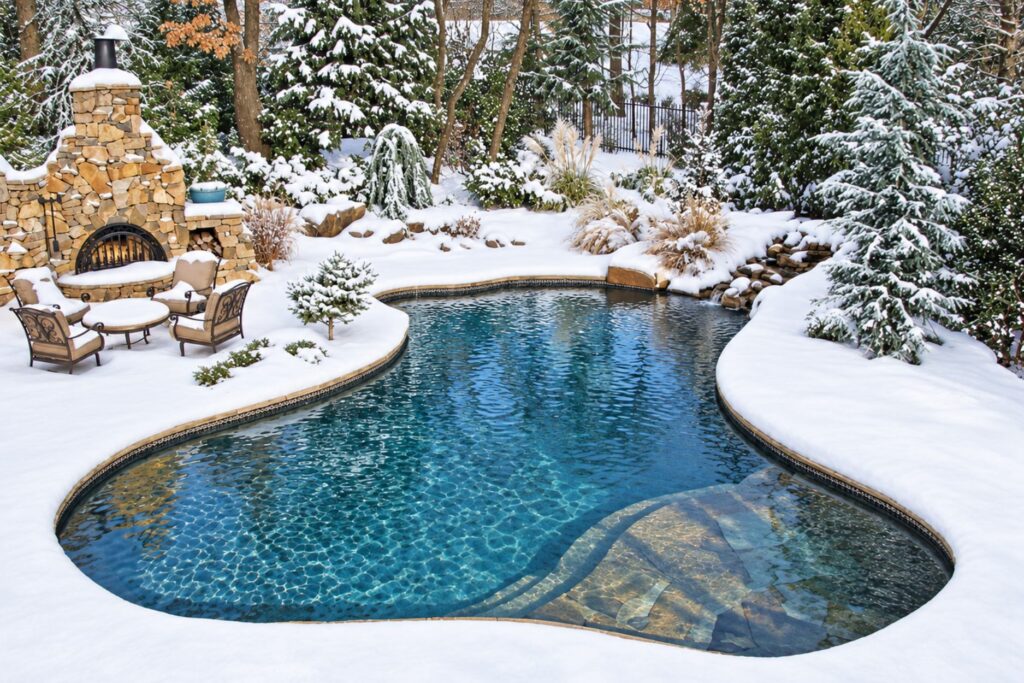
Pool season is over (we know, we’re sad too), but your pool needs one last bit of love before winter. If you live where temps sit in the low 30s for weeks at a time, knowing how to winterize an inground pool is what stands between you and cracked pipes, a busted pump, and a swamp-green surprise in spring.
Good news: it’s easier than it sounds. Follow these 9 steps and your pool will be tucked in, protected, and ready to party when warm weather comes back.
What You Need to Winterize an Inground Pool
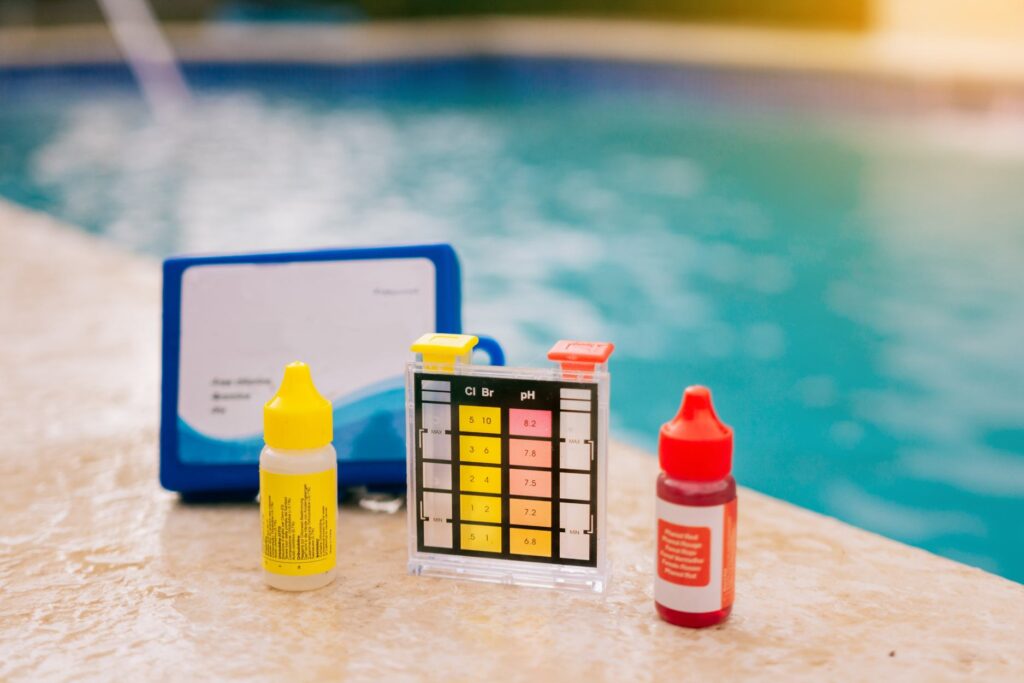
Grab these before you start:
- Pool test kit
- Pool shock and winter algaecide
- Submersible pump
- Air compressor, pool blower, or heavy-duty shop vac (with a hose or PVC adapter)
- Freeze plugs for your return lines
- A Gizzmo for your skimmer
- A winter cover or safety cover
How to Winterize an Inground Pool in 9 Steps
Step 1: Give It a Deep Clean
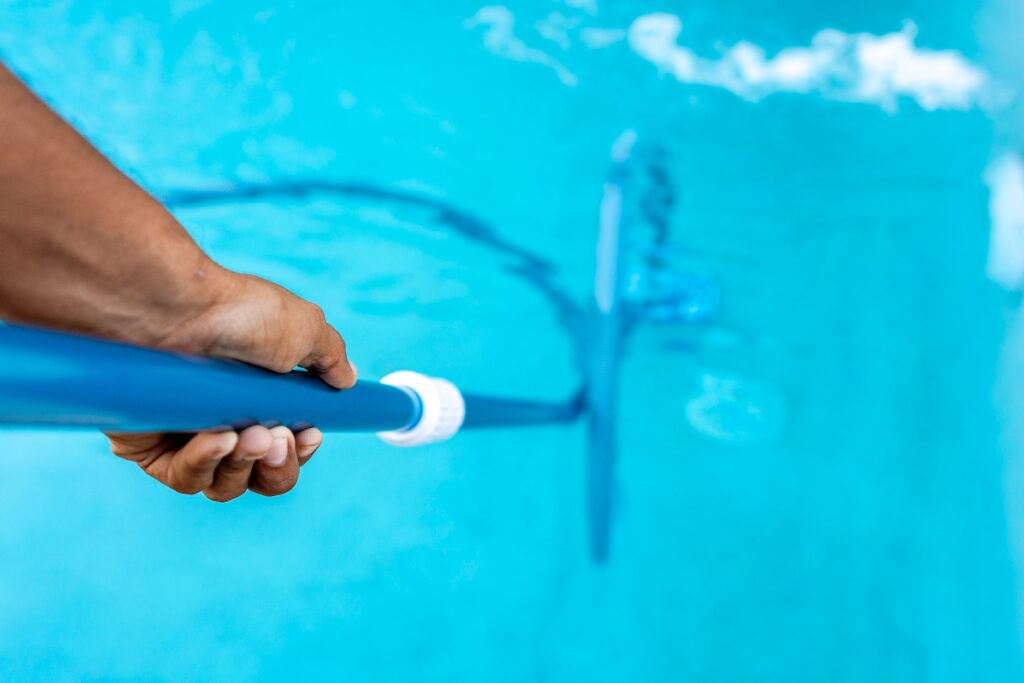
Pull out the floaties, skim the surface, brush the walls, and vacuum (or let your automatic cleaner run a few extra hours). Empty the skimmer and pump baskets. Clean water now means an easier opening later.
Step 2: Test and Balance the Water
Grab your test kit. You’re aiming for a pH of 7.4 to 7.6 and alkalinity of 80 to 120 ppm. Adjust as needed before moving on.
Step 3: Shock It and Add Algaecide
Shock your pool to wipe out bacteria and gunk, then add a winter algaecide to keep algae from moving in while you’re gone. Run the pump so everything circulates, and check the algaecide label for how long to wait after shocking. Future you will thank you in spring.
Step 4: Lower the Water Level
Use a submersible pump to drop the water below your skimmer and return lines, usually about 12 inches below the tile. Got an automatic cover? Stop about 2 inches below the skimmer opening. Never drain the pool all the way. An empty pool can shift or crack.
Step 5: Blow Out and Plug the Lines
Turn off the pump. Then use your air compressor, blower, or shop vac to blast every drop of water out of each return and cleaner line. As each line clears, pop in a freeze plug. Screw a Gizzmo into the skimmer so it won’t crack if ice forms.
Pro tip: If you have a spa, water features, or plumbing that looks like a maze, hand this step off to a pro.
Step 6: Airlock the Main Drain
Open the main drain valve and blow air backward down the line. When you see bubbles in the pool, close the valve and shut off the blower. Boom, your main drain is airlocked.
Step 7: Clean the Filter and Drain Your Equipment
Give your filter a thorough clean (sand filters can skip this). Then pull the winterizing plugs to drain your equipment: one on the filter, two on each pump, one on the chlorinator, and one or two on the heater. Toss all the plugs in the pump basket so you can find them in spring.
Step 8: Cut the Power
Flip the breaker for your pool equipment so nothing turns on over the winter. This matters most if your pump has freeze protection that kicks on automatically at 32 degrees.
Step 9: Cover It Up
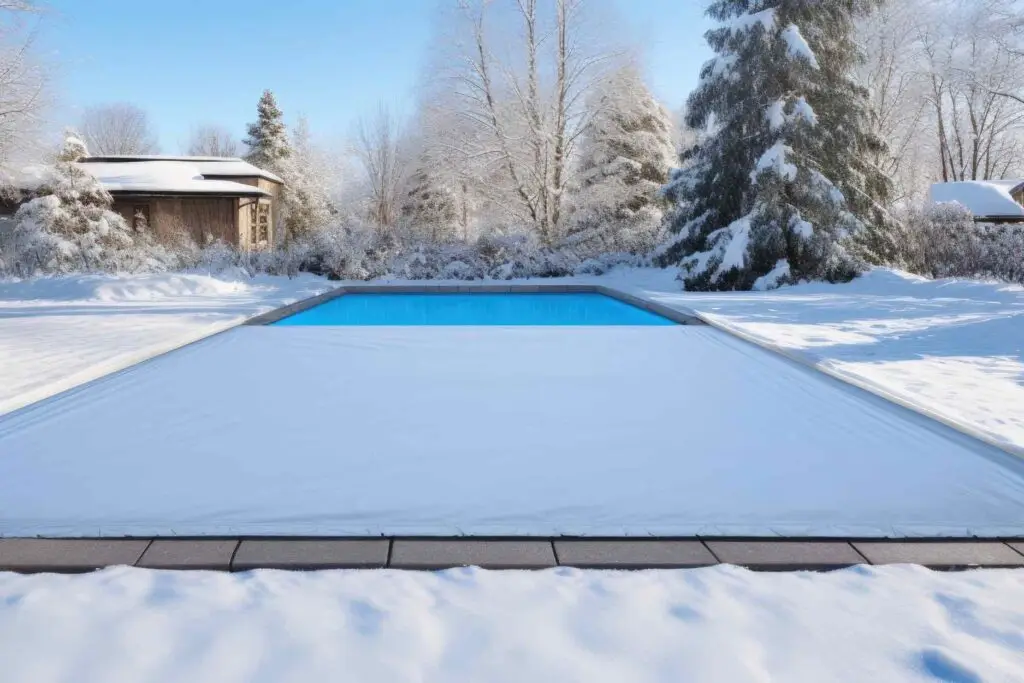
Finish with a clean, durable winter cover or a safety cover that anchors to your deck. A cover with a built-in pump that drains standing water is a great upgrade. Hit it with a leaf blower every so often to keep it clear of leaves.
Ready to Winterize Your Inground Pool?
Every pool is a little different, so keep your equipment manuals handy. If it’s your first time learning how to winterize an inground pool, have a pro walk you through it once. After that, you’ve got this.
Want a hand closing your pool this year? Contact your local Blue Haven team and we’ll help you winterize it the right way, so opening day is all fun and no surprises.
Want backyard ideas all year long? Join the Backyard Blueprint for fun ways to enjoy your pool and backyard in every season.