
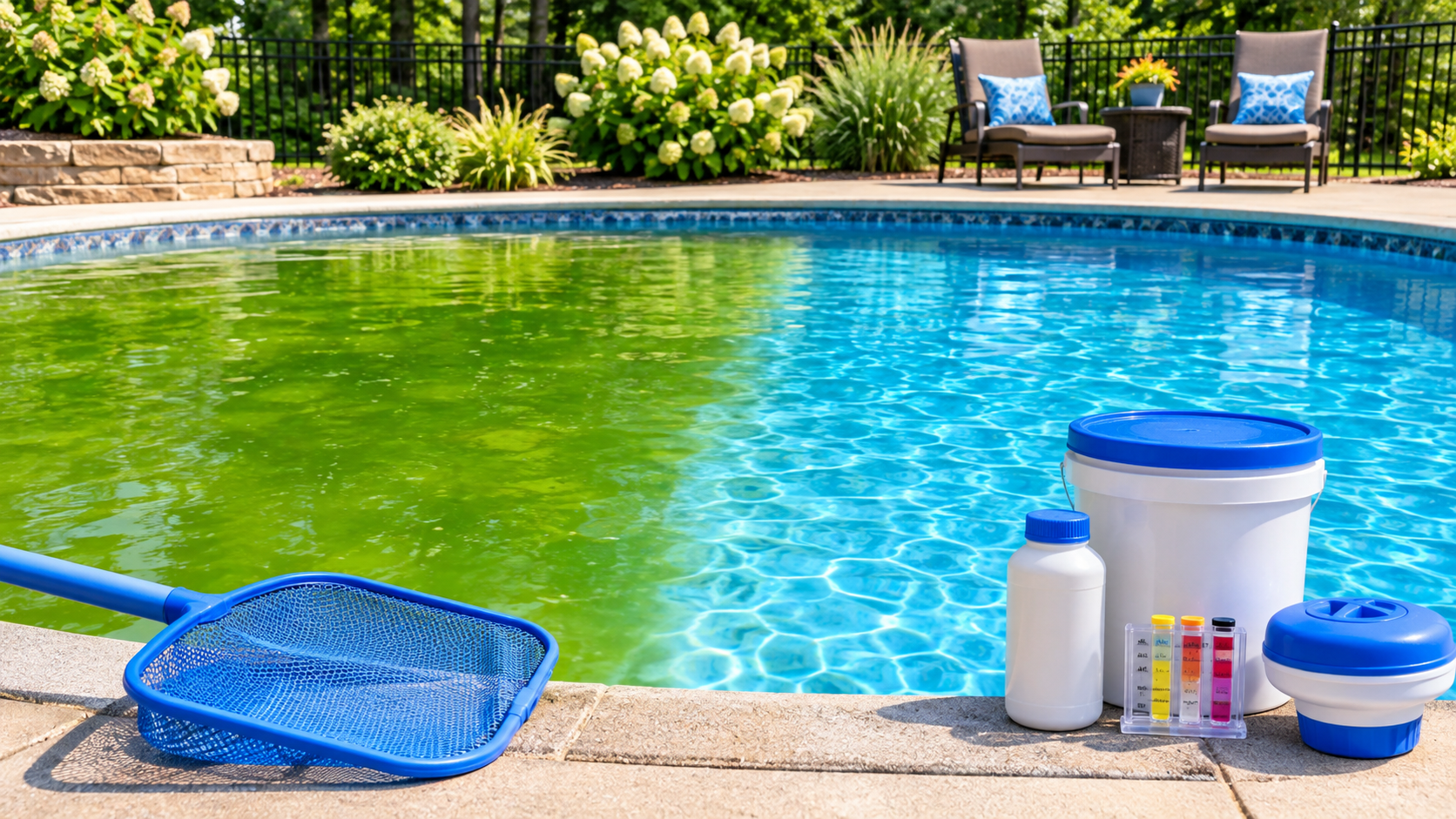
Algae is one of the most common pool problems we hear about. One weekend you have clear blue water, and by Wednesday the walls look like they need a paint job. The good news is that algae is almost always preventable, and if it does show up, you can usually clear it without draining the pool or spending a fortune.
This guide covers what algae is, why it grows, how to stop it before it starts, how to get rid of it once it’s there, what it costs, and when to call a professional.
How Do You Get Rid of Pool Algae?
To get rid of pool algae, first test your water and balance the chemistry. Then brush all the surfaces, shock the pool with a high dose of chlorine, run the filter nonstop, and vacuum the dead algae to waste. Most green pools clear in three to seven days. Keep free chlorine, pH and alkalinity in the right range every week to stop it from coming back.
What Is Pool Algae?
Algae are tiny plant-like organisms. They are always present in the air and water, but they only take over when conditions are right: warm water, sunlight, low chlorine, and extra nutrients like phosphates. There are three common types you’ll run into.
Green Algae
This is the most common type. It turns the water a cloudy green, and it can spread to the walls, steps and floor in a few days. It usually responds well to chlorine and is the easiest to clear.
Mustard (Yellow) Algae
Mustard algae sticks to the walls and floor and often shows up in shady spots. It’s tough because it resists chlorine. It can look like dust at first, so people sometimes mistake it for dirt. You’ll need to brush it hard and shock the pool more than once.
Black Algae
Black algae is the hardest to beat. It forms dark spots that look like they’re stuck in the plaster or tile, and it has a protective outer layer that chlorine has trouble getting through. It needs stiff brushing, a strong shock, and patience.
Why Pool Algae Grows
Most algae problems come down to a few simple causes:
- Free chlorine drops too low, often after heavy rain, a lot of swimmers, or a hot week
- The pH or alkalinity is out of balance, which makes chlorine work less effectively
- The pump doesn’t run long enough each day to circulate the water
- The filter is dirty or clogged
- Leaves, pollen, and other debris sit in the water and feed the algae
- Phosphates and nitrates build up from leaves, fertilizer runoff, or sunscreen and body oils
- The pool gets little direct use, so the water sits still
If you’ve ever had algae show up right after a storm, you’ve seen the first cause in action.
How to Prevent Pool Algae
Prevention is always cheaper than cleanup. Most homeowners who never deal with algae follow a simple weekly routine.
1. Keep Your Chemistry in Range
Test your water at least twice a week in summer. These are the general targets most pool owners aim for:
| Test | Target Range | Why It Matters |
|---|---|---|
| Free chlorine | 1 to 3 ppm (normal) | Kills algae and bacteria |
| pH | 7.2 to 7.6 | Keeps chlorine working well |
| Total alkalinity | 80 to 120 ppm | Keeps pH steady |
| Cyanuric acid (CYA) | 30 to 50 ppm | Protects chlorine from sunlight |
| Calcium hardness | 200 to 400 ppm (plaster) | Protects surfaces and equipment |
Your local pool store or your pool’s equipment manual may give slightly different numbers based on your pool type, so check those too.
2. Run Your Pump Long Enough
Most pools need the pump to run eight to twelve hours a day in warm weather. The exact time depends on water temperature, pool size, and how much use it gets. A common rule is to run the pump long enough to circulate the entire volume of water at least once a day. If you have a variable speed pump, running it at a lower speed for longer is usually cheaper and works just as well.
3. Brush Every Week
Brush the walls, steps, floor, and waterline once a week. Algae hides in corners, behind ladders, and in the shaded part of the pool. Brushing breaks up the growth so chlorine can reach it. Use a stiff brush on plaster and tile, and a softer one on vinyl.
4. Clean the Filter
A dirty filter can’t remove algae spores and debris from the water. Clean cartridges every few weeks, backwash a sand or DE filter when the pressure gauge rises about 8 to 10 psi above its clean level, and replace cartridges when they stop cleaning well.
5. Skim and Clear Debris Daily
Leaves and bugs break down in the water and feed the algae. A quick skim every day takes a few minutes and makes a big difference.
6. Cover the Pool When It’s Not in Use
A pool cover blocks sunlight, keeps debris out, and holds heat. It’s one of the most effective ways to stop algae during the off season or during a vacation.
7. Add a Maintenance Algaecide (Optional)
A preventive algaecide can help, especially in hot climates or pools with low use. It works as a backup to chlorine, not a replacement for it. Always follow the label directions and never mix it with other chemicals in the same bucket.
How to Get Rid of Pool Algae: Step-by-Step
If algae has already taken hold, follow these steps in order. Skipping the brushing or the filter step is the most common reason people end up repeating the whole process.
Step 1: Test the Water
Check free chlorine, pH, alkalinity, and CYA. If the pH is high or the alkalinity is low, algae will come back even after you clear it. Fix the balance before you shock.
Step 2: Brush Everything
Brush all the surfaces, including the walls, floor, steps, and waterline. For black or mustard algae, use a stiff brush and scrub hard. You want to break the growth loose.
Step 3: Shock the Pool
Add a shock treatment to raise free chlorine high enough to kill the algae. For a green pool, the usual target is 10 ppm or higher, and for black algae you may need to go higher. Shock in the evening so the sun doesn’t burn off the chlorine.
Step 4: Run the Filter Nonstop
Keep the pump and filter running around the clock until the water clears. Check the pressure gauge and clean or backwash the filter as needed. A clogged filter can slow the whole process down.
Step 5: Vacuum to Waste
Dead algae sinks to the bottom and forms a layer of dust. If you vacuum it through the filter, it can clog the system quickly. Set the multiport valve to waste, or use a vacuum that keeps the debris out of the filter.
Step 6: Retest and Repeat If Needed
Test the water again after a day or two. If it’s still cloudy, shock once more and repeat the brushing and filtering. Most green pools clear in three to seven days. Black algae can take two weeks or more.
Step 7: Rebalance and Keep Up the Routine
Once the water is clear, bring the chemistry back into range and go back to your weekly routine. Many people skip this step and see algae return within a month.
A Few Safety Notes
- Never mix chemicals together, especially chlorine and acid. The mix can release dangerous gases.
- Wear gloves and eye protection when handling shock or acid.
- Add chemicals to water, not water to chemicals.
- Keep swimmers out until free chlorine drops back into the safe range.
- Store chemicals in a cool, dry place away from children and pets.
How Much Does Pool Algae Treatment Cost?
This is the question most homeowners want answered first, so here is what the market looks like. I went through several recent cost guides for this article. Many of them come from pool service companies or content sites, so the numbers vary a lot. Treat the figures below as typical ranges, not promises, and remember that your local prices will depend on your area and your pool’s size.
| Service or Item | Typical Cost (US) | What It Covers |
|---|---|---|
| Algae assessment or diagnosis | $50 to $250 | Testing water and checking the type and severity of algae |
| Green pool cleanup (professional) | $300 to $800 | Brushing, shocking, filtering, and chemical balance |
| Severe or black algae treatment | $500 to $900+ | Heavy scrubbing, multiple shock rounds, and extra visits |
| Routine weekly pool service | $80 to $200 per month | Chemicals, skimming, brushing, and basic checks |
| DIY shock and chemicals (per treatment) | Lower cost, but time-consuming | Shock, algaecide, test kit refills |
| Filter cartridge replacement | $50 to $200 | Replacing a worn cartridge that stops cleaning |
Is That Price Actually Good?
Here’s how I’d think about it. A green pool cleanup at $300 to $800 is within the normal range for a typical residential pool in the US. If a company quotes you far above that for a simple green pool, ask them to explain each line item. If someone offers to clear a very green, neglected pool for well under $150, be careful. That price often means they’ll only do a quick shock and leave the filter or the balance issues untouched, and the algae will be back in a few weeks.
Doing it yourself is usually cheaper in dollars, but it takes time and it’s easy to make a mistake. A failed DIY attempt can cost you a second round of chemicals and a longer wait. If your pool has been green for a week or more, or if the algae is black or mustard, a professional visit is often worth the cost.
Cost Factors That Change the Price
- Pool size and water volume
- How far the algae has spread and how long it’s been there
- Type of algae (black and mustard cost more to treat)
- Filter type and whether it needs repair
- Local labor rates and service fees
- Whether the pool needs extra visits or a full drain and cleaning
If the pool needs a drain and refill, the cost goes up quickly. That’s usually reserved for severe neglect or equipment problems, not normal algae.
When to Call a Professional
You can usually handle light algae yourself. Call a pool professional if:
- The water stays green or cloudy after two shock rounds
- You see black algae or stains that won’t brush off
- Your filter, pump, or heater is making noise, losing pressure, or not working
- The chemistry won’t stay balanced no matter what you add
- You have a salt system, heater, or automation that needs checking
How Blue Haven Can Help
Blue Haven Pools & Spas builds custom inground gunite pools across the United States. We’ve been in the business for more than 70 years and have built over 300,000 pools nationwide, with local offices in more than 60 locations. That experience shows up in the pool itself, because a well-designed, properly plumbed pool with the right filtration and circulation is much easier to keep clear.
If you’re thinking about a new pool or a remodel, algae prevention starts at the design stage. Our designers look at how you plan to use the backyard, where the sun falls, how water moves through the pool, and which equipment will make your weekly routine easier. We also offer SmartFeatures for pool equipment, and our team provides ongoing support so your pool stays in good shape after the build.
Here is how we can help you get started:
- Get a free in-home estimate and 3D design: Get My Free Estimate
- Learn what drives pool costs: Inground Pool Pricing Guide
- See financing options for a new pool or remodel: Financing Your Pool
- Explore our remodel services: Inground Pool Remodeling and Renovations
- Browse new pool designs: New Pools
- See real backyards we’ve built: Swimming Pool Photos and Gallery
- Find your nearest office: Blue Haven Locations
- Read more pool tips on our blog: Blue Haven Blog
- Smart equipment and automation: SmartFeatures
If you’re not sure whether your algae problem is a quick fix or something bigger, contact your local Blue Haven team and we’ll point you in the right direction.
Frequently Asked Questions About Pool Algae
How long does it take to get rid of pool algae?
Most green pools clear in three to seven days with proper shocking, brushing and filtering. Black algae can take two weeks or longer because it’s protected by a tough outer layer.
Can I swim in a pool with algae?
It’s not a good idea. Algae itself isn’t always dangerous, but the low chlorine levels needed to fight it can allow bacteria to grow. Wait until free chlorine is back in the safe range before swimming.
Why does my pool keep getting algae?
The most common reasons are low free chlorine, unbalanced pH or alkalinity, short pump run times, a dirty filter, or high phosphates. If you keep fixing the surface but not the root cause, the algae will come back.
Is green pool water dangerous?
Green water can hide problems and may signal low sanitizer. It’s best not to swim in it until it’s clear and the chemistry is balanced.
Does salt water pool get algae?
Yes. A salt system still needs free chlorine to stay clear. If the salt cell isn’t producing enough chlorine, or if it needs cleaning, algae can grow just like in a traditional chlorine pool.
Can algae damage my pool?
Algae itself doesn’t damage plaster or fiberglass, but black algae can stain surfaces and mustard algae can leave marks. Long-term neglect can also cause etching or scale, which is more expensive to fix.
How often should I shock my pool?
Many pool owners shock once a week in summer and after heavy rain, heavy use, or a hot spell. Your test results should guide you more than a set schedule.
Does a pool cover stop algae?
A cover blocks sunlight and debris, which helps a lot. It won’t stop algae completely, so you’ll still need to keep the chemistry balanced.