
Cold nights don’t have to shut down your backyard. A patio heater keeps the s’mores, game nights, and fall pool parties going well past summer. The hard part? Picking one. Electric, propane, natural gas, tabletop, wall-mounted… it’s a lot. Here’s the no-fluff breakdown so you can choose the right patio heater in about five minutes.
Already have a fire pit? A patio heater is the perfect sidekick for spots the fire can’t reach, like your outdoor dining table. And if you want the pool to stay swimmable when it gets cold, a pool heater handles the water while your patio heater handles you.
Step 1: Choose Your Patio Heater Power Source
Your power source decides how much space your patio heater can cover and what it costs to run. Here’s the quick compare:
Electric (Infrared) Patio Heaters
The easiest option: plug it in, flip it on, done. Infrared heat warms people and objects instead of the air, so you feel it best when you’re sitting in its path.
Love it if: You have a covered or semi-enclosed spot like a pergola, screened porch, or patio nook with an outlet nearby.
Skip it if: You’re trying to heat a big, wide-open yard.
Pro tip: Check the wattage. More watts means more heat and more coverage, which tells you how many heaters you’ll need. Most run $100 to $800. Bigger units may need a 240-volt line from an electrician.
Propane Patio Heaters
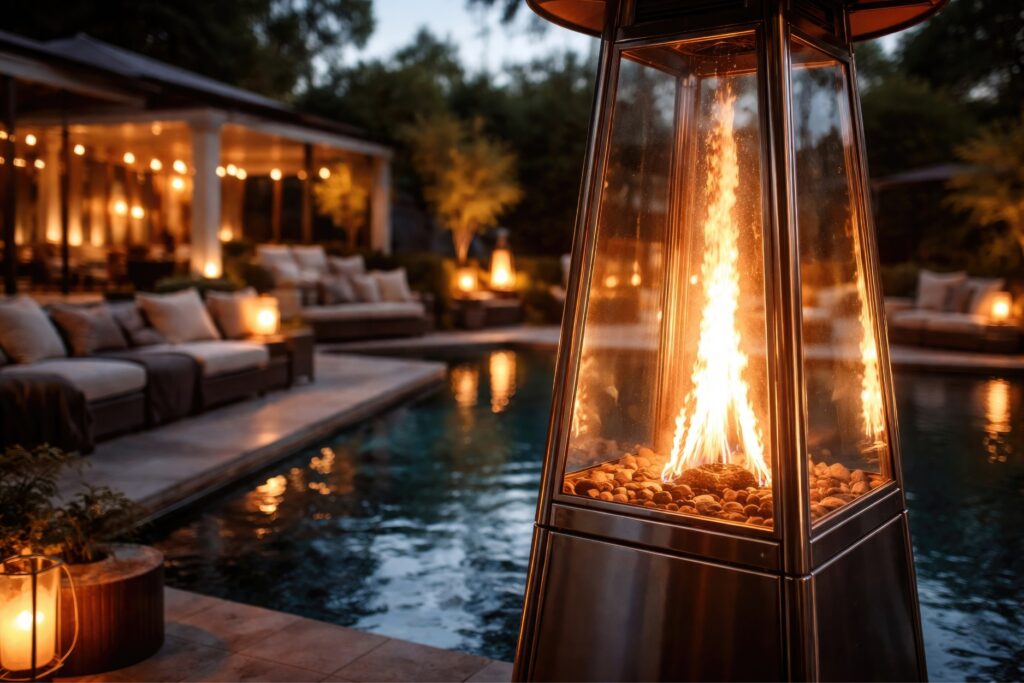
The crowd favorite. Propane packs more heat (measured in BTUs) than most electric models, and the tank hides in the base so you can roll it wherever the party is.
Love it if: You want maximum heat and the freedom to move it around.
Skip it if: Tank swaps sound like a chore. Propane also costs the most to run.
Pro tip: Most tall models use a standard 20-pound tank, the same one your grill uses. Refilling it is usually cheaper than exchanging it.
Natural Gas Patio Heaters
Hooked up to your home’s gas line, so you never run out of fuel. Just turn it on and get cozy.
Love it if: You already have a gas line near your patio.
Skip it if: You don’t. Running a new line just for a heater usually isn’t worth the cost.
Pro tip: Have a pro handle the hookup. It’s a gas line, not a DIY weekend project.
Step 2: Pick Your Style
Now the fun part. Choose the patio heater style that fits your space. Heads up: not every style comes in every power source.
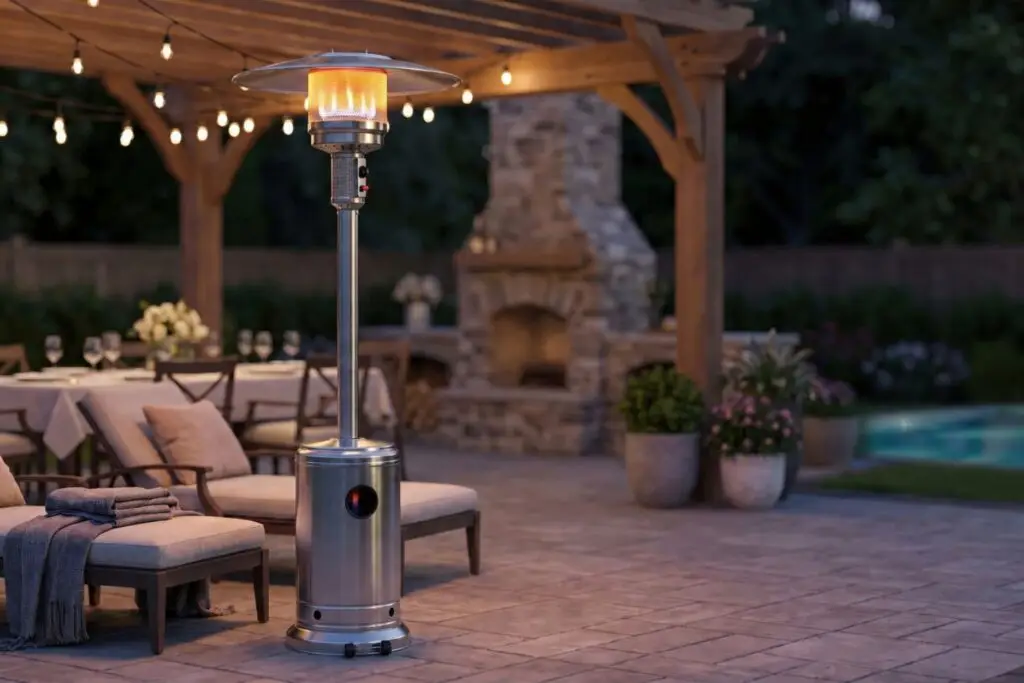
Standing Heaters
The tall ones you see at restaurants. Big heat, big coverage, and they work in open or covered spaces. Just watch your clearance under low roofs, pergolas, and umbrellas.
Tabletop Heaters
Small, cute, and portable. Perfect for a bistro table, a cozy two-person setup, or backup for a bigger heater. Less heat, though.
Wall-Mounted Heaters
Mount it on a wall or ceiling and save your floor space. Most are electric, and many let you aim the heat. Great for covered patios and tight spots. Get it professionally installed.
Parasol (Umbrella) Heaters
Hangs from a patio umbrella or gazebo and warms whoever is right underneath. Easy to set up, but coverage is small and you’ll likely need an extension cord. Tape it down so nobody trips.
Step 3: Place It Safely
- Set your patio heater on flat, stable ground. Look for a model with an automatic tip-over shutoff.
- Keep it clear of anything that can burn (curtains, umbrellas, branches). Follow the clearance distances in the manual.
- Use gas heaters only in open, well-ventilated areas, never in enclosed spaces.
- Cover or store it when you’re not using it so it lasts for years.
Make Your Backyard a Year-Round Hangout
Picture it: it’s November, the pool lights are glowing, and nobody wants to go inside. Your patio heater handles the chill. Want the rest of your backyard ready for every season? Our designers can help you plan a space with a pool, spa, fire features, and plenty of cozy spots to gather.
Not ready yet? Join our Backyard Blueprint emails for fun ideas to get more out of your backyard all year long.