
“What color should my pool be?” It’s one of the first questions every future pool owner asks, and for good reason. Plaster, tile, decking, lights, umbrellas: every piece comes in dozens of shades, and pool colors are hard to change once the water’s in. Nobody wants a combo that looked amazing on the sample board and clashes in real life.
Short answer: Decide how you want your backyard to feel, pick your interior finish (it decides your water color), then build your tile, deck, and accents around it. We help homeowners choose pool colors every day, so below are the six steps that make it easy, plus a cheat sheet you can screenshot and bring to your design meeting.
Good news: you’re no longer stuck with white plaster and plain blue waterline tile. Let’s find your combo.
Step 1: Pick Your Backyard Vibe First
Before you look at a single tile, decide how you want your backyard to feel. Your vibe picks your pool colors, and that makes every other choice easier. Here are four to start with:
- Beachy and bright: Light blues and crisp whites. Think Greek Isles.
- Tropical getaway: Deep blues, greens, and dark finishes, like these tropical pool ideas. Darker colors add depth and reflect the landscape around them.
- Modern and clean: Aquamarine, teal, grays, and white for a modern pool design.
- Desert chic: Warm earth tones and sandy neutrals that match the landscape.
Pro tip: Pull 2 or 3 colors from your house, roof, or landscaping and build from there. Still not sure what your vibe is? Scroll through real backyard inspo on our Pinterest and save the looks that make you stop scrolling.
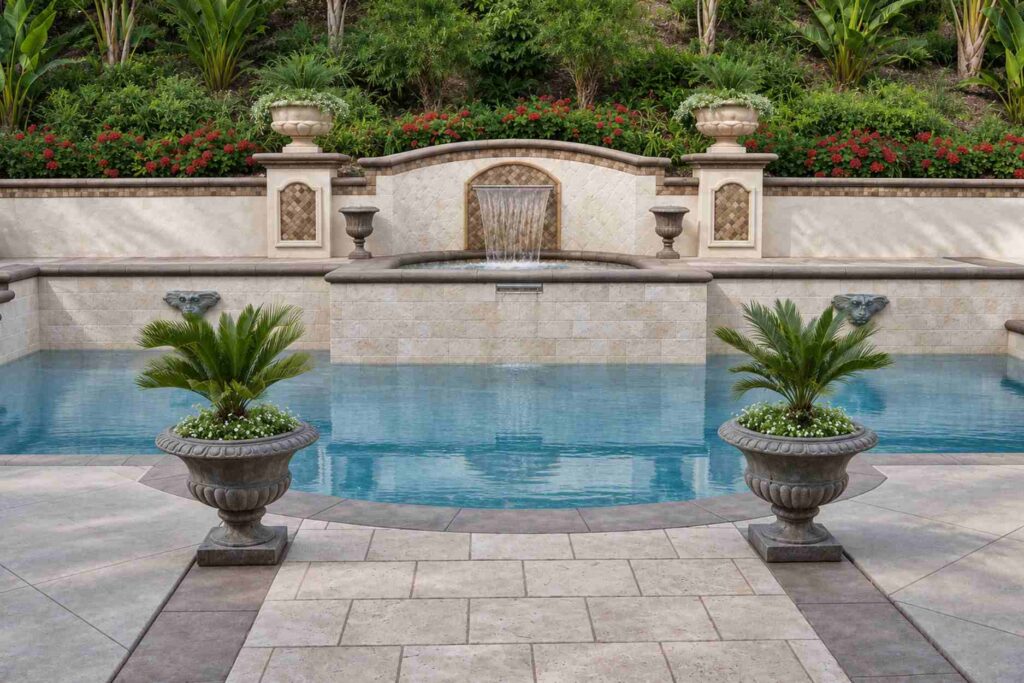
Step 2: Choose Your Interior Finish (It Sets Your Water Color)
This is the biggest color decision you’ll make, because your interior finish decides what color your water looks. Whether you go with marcite plaster, quartz, or pebble, here’s the cheat code:
- White: Classic bright blue water
- Light gray or light blue: Brighter aqua water
- Dark gray, blue, or black: Deep, mirror-like water with lagoon vibes
- Earth tones: A natural, pond-style look
(A few brave souls have even gone red. Bold move.) Look at samples wet and in sunlight before you commit. A dry chip looks nothing like it does underwater, and your finish is something you’ll live with for years.
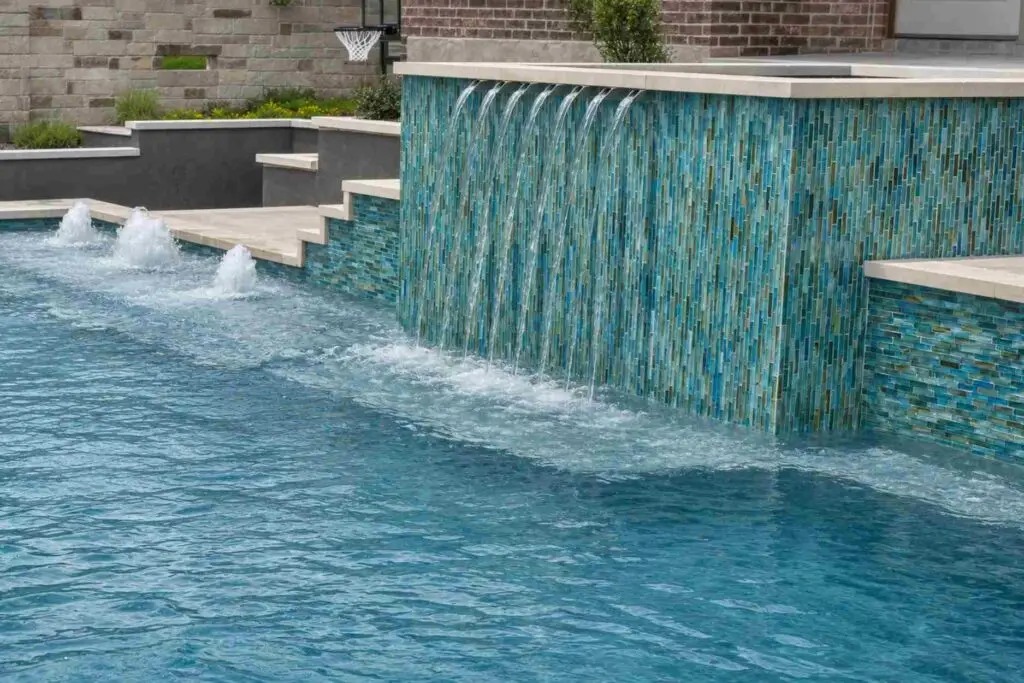
Step 3: Add Some Sparkle With Tile
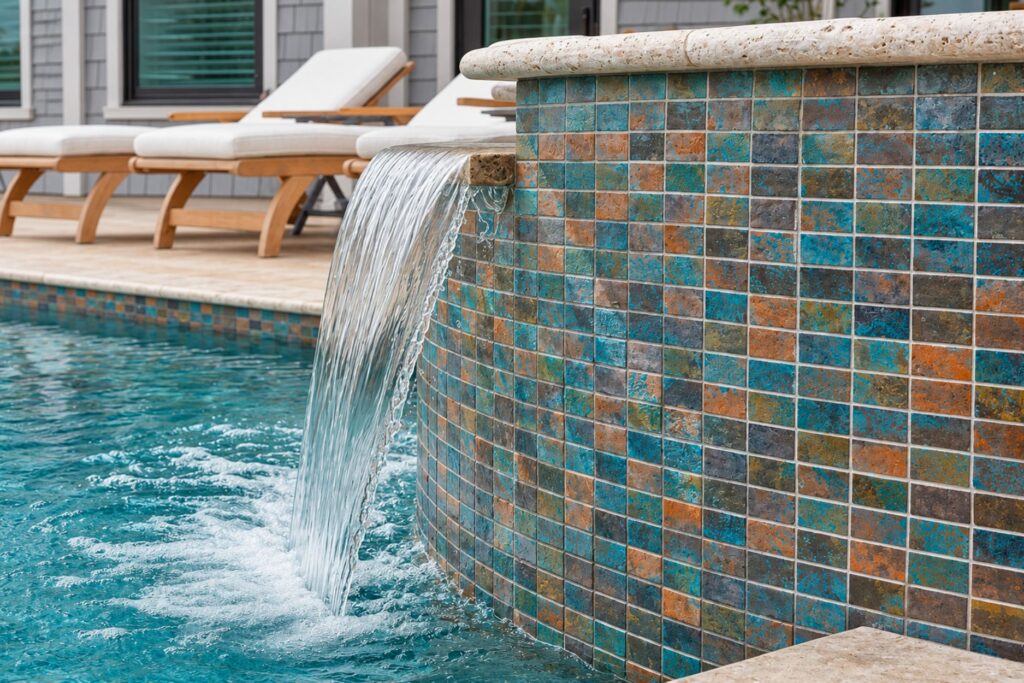
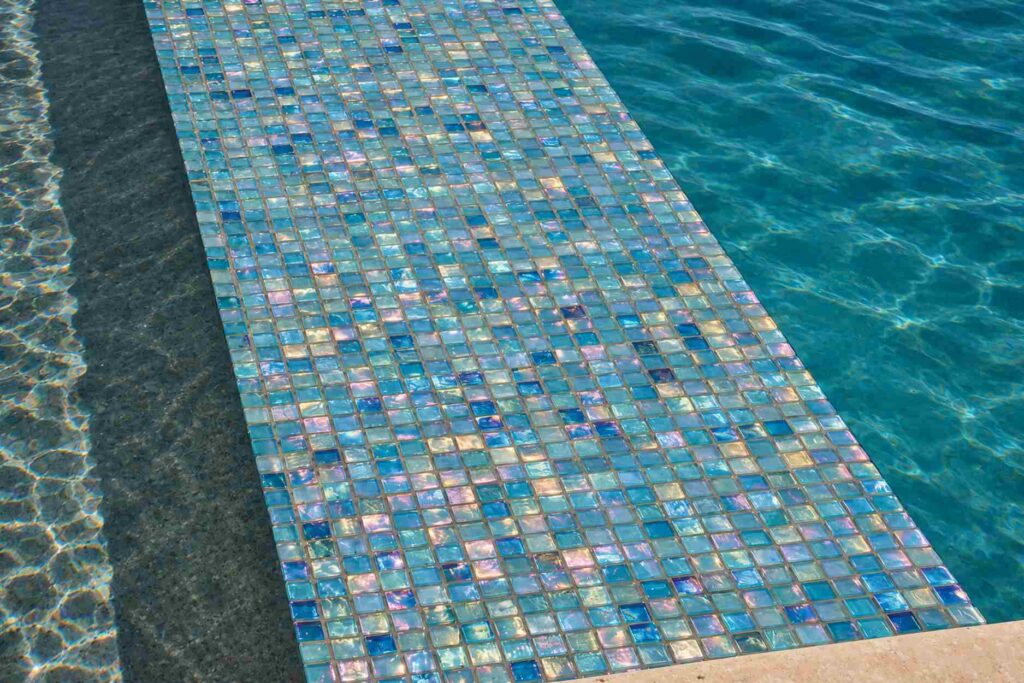
Tile is your pool’s jewelry. It’s where you can go bold without committing your whole backyard to it. Glass, porcelain, ceramic, and stone all work, from classic cobalt blue to iridescent glass that shimmers in the sun.
Where Tile Makes the Biggest Impact
- The waterline: Frames the whole pool
- Raised spa walls: A giant canvas for a head-turning look
- Spa dam walls and spillways: See these spillway styles in photos
- Raised bond beams: The part of the pool wall that sits above the water
Want something playful? Add a ready-made pool mosaic: sea turtles, starfish, a fleur-de-lis, even your favorite team’s logo. It’s affordable, easy, and the kids will love it.
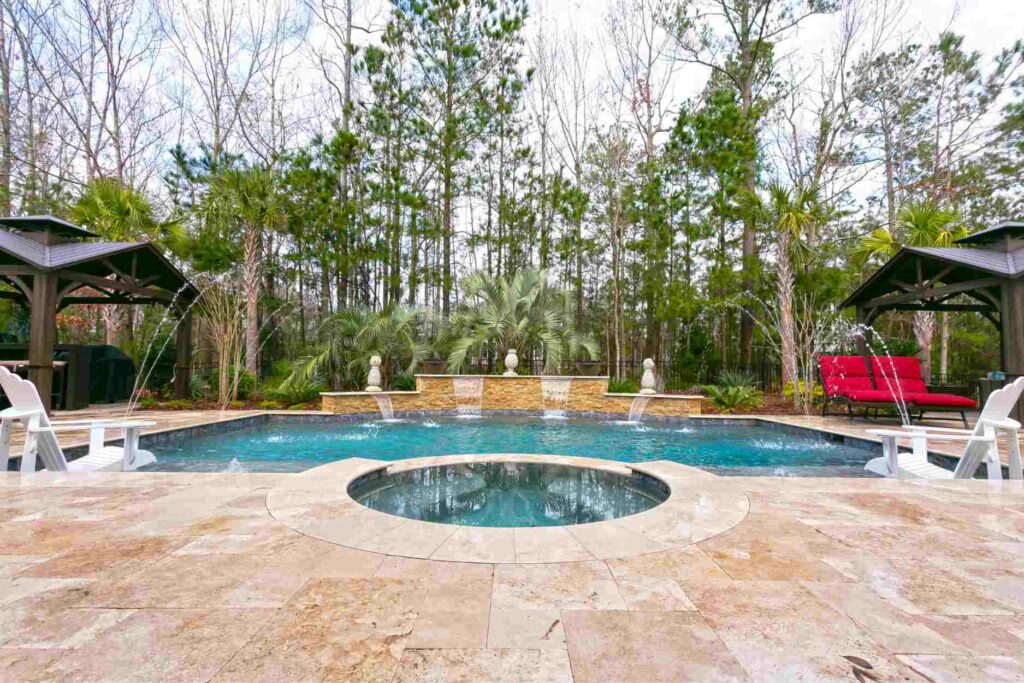
Step 4: Ground It With Your Pool Deck and Coping
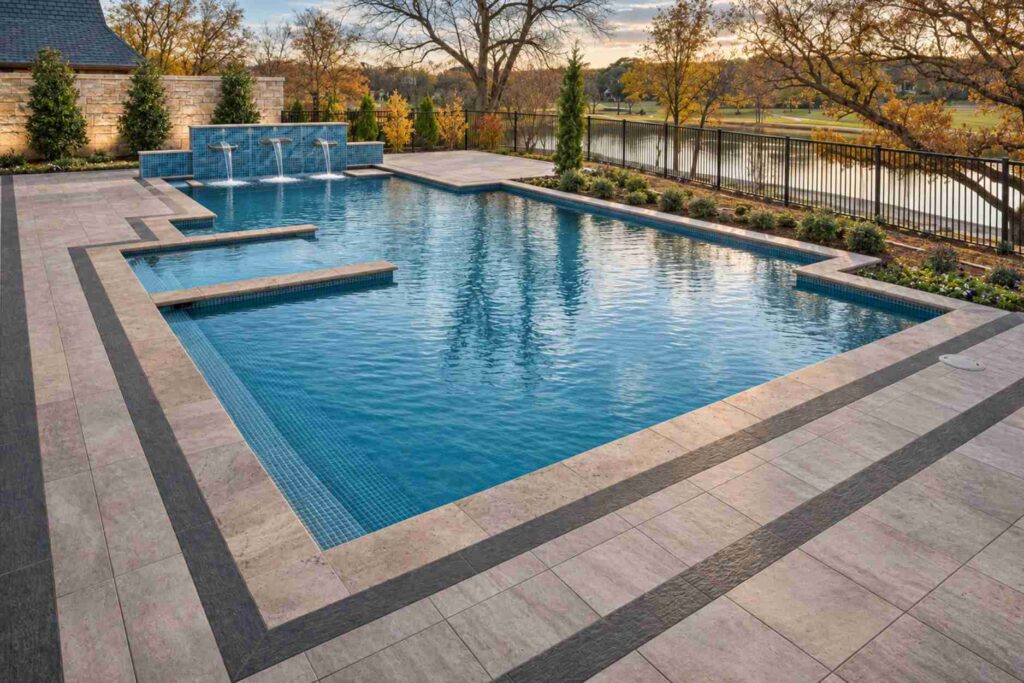
Your pool deck, along with your steps, walls, and planters, ties the pool to the rest of your yard. (Not sure how much deck you need? Start with these 5 questions for planning your pool deck.) Natural stone, concrete pavers, stamped concrete, and wood each set a different mood. Rustic flagstone feels Mediterranean. Smooth concrete feels modern.
Most decks lean neutral, which helps your tile and water color pop. Want more color? Decorative concrete and some flagstones come in rich, warm tones.
Don’t Sleep on Coping
Pool coping is the edge around your pool. Go dark or bold to show off your pool’s shape. Go subtle so the pool blends into the deck.
Step 5: Light It Up With Color-Changing LEDs
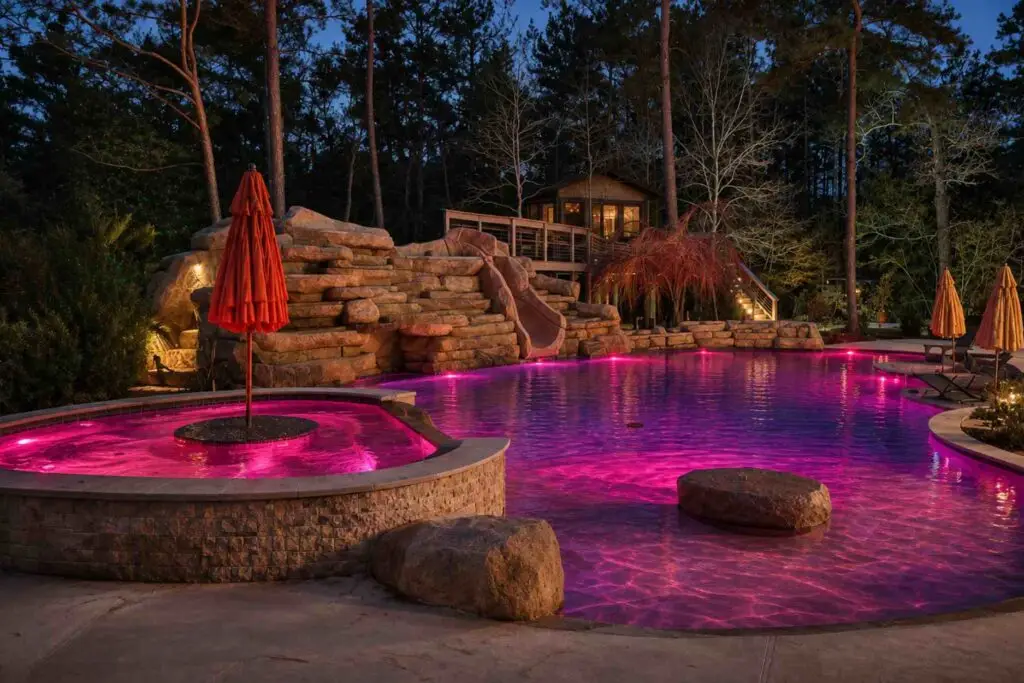
Your pool gets a whole second look after dark. Color-changing LED lights let you pick almost any color from an app, a touchscreen, or your voice. Pair them with pool automation and you can:
- Set one color for the spa and another for the pool
- Control how fast the colors change and how bright they glow
- Run light shows: red, white, and blue for the Fourth, green, gold, and purple for Mardi Gras, or slow blues for a chill night
Step 6: Finish With Umbrellas and Patio Furniture
This is the low-commitment part. Umbrellas and cushions can be swapped anytime, so it’s the best place to play with bright colors.
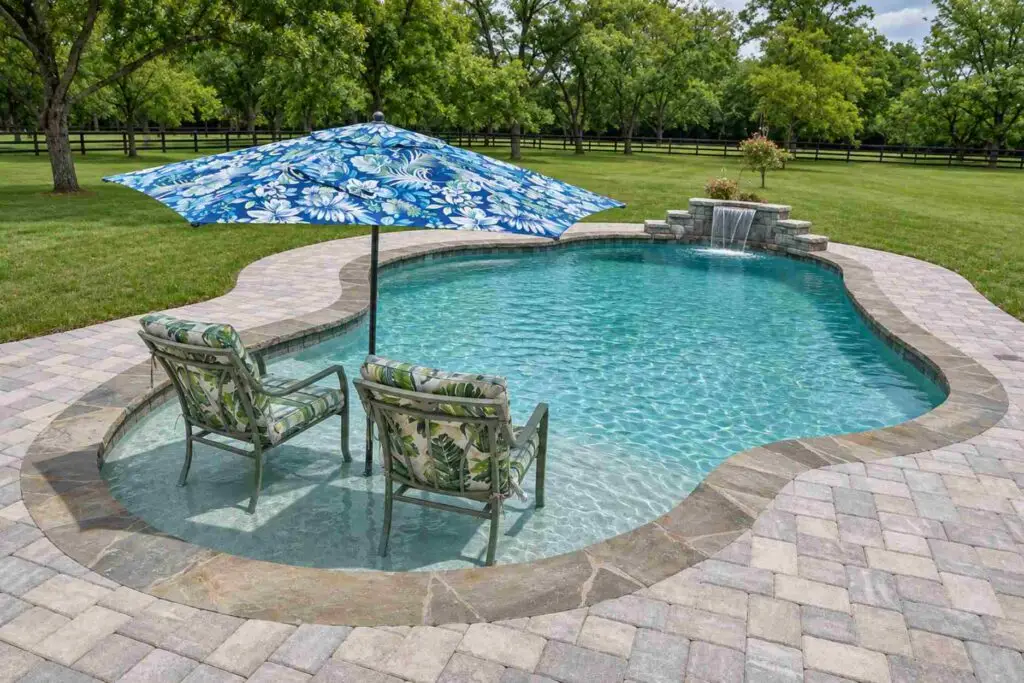
- Umbrellas: The most budget-friendly way to add shade. Go bright for personality or neutral for calm. They work in the pool too, on a sun shelf or over a spa.
- Furniture: Teak, wicker, and wrought iron each bring a different look. Here are some tips for choosing outdoor furniture. Want to level up? Add a pool cabana.
- Cushions and pillows: The easiest way to repeat your tile or accent color.
Which Pool Colors Go Together? A Cheat Sheet
Whatever you choose, keep it consistent with your home’s style. Here’s a quick starting point:
| Vibe | Interior Finish | Tile | Deck | Accents |
|---|---|---|---|---|
| Beachy | White or light blue | Light blue glass | Light sand pavers | White, coral |
| Tropical | Dark blue or black | Deep blue or green glass | Natural stone | Bright greens, florals |
| Modern | Gray | Gray or teal glass | Smooth light concrete | Black, white, one bold pop |
| Desert | Tan or earth tone | Earthy stone or porcelain | Warm flagstone | Terracotta, sage |
Pool Color FAQs
What pool finish makes the water look the bluest?
White or light blue. They reflect the most light and give you that classic bright blue water.
Do dark pool finishes make the water warmer?
A little. Darker finishes absorb more sunlight, so they can help the water feel slightly warmer.
What color pool deck stays the coolest?
Lighter colors. They reflect more sun and stay cooler on bare feet than dark decks.
Ready to Choose Your Pool Colors?
You don’t have to guess from a tiny sample chip. Our designers will help you build a palette that fits your home and show you real samples in person, so you love your pool colors from day one instead of wishing you’d picked differently.