
The cannonballs are done, the floaties are deflating, and your pool is ready for a long winter nap. Here’s the catch: how you close your pool for winter decides what you find when you pull the cover off in spring. Close it right and you get sparkling water. Close it wrong and you get something that looks like a science experiment. We’ll walk you through the timing, supplies, and step-by-step process so you can close with confidence.
When Should You Close Your Pool?
Here’s the golden rule: close your pool once the water stays below 65°F. Algae slows way down in cooler water. Live somewhere warm? Lucky you. You’ll probably keep swimming, or even throw a fall or winter pool party.
Pool Closing Timeline by Region
| Region | Typical closing window |
|---|---|
| Northeast / Upper Midwest | Mid-Sept to mid-Oct |
| Mid-Atlantic | Late Sept to late Oct |
| Midwest | Sept to Oct |
| Mountain states | Sept to early Oct |
| Pacific Northwest | Sept to Oct |
| Southeast / Carolinas / Tennessee | Oct to Nov, sometimes left open |
| Texas | Often stays open year-round |
| Florida | Generally not closed |
| Arizona / Southern California | Generally not closed |
Live somewhere warm? Lucky you. You’ll probably keep swimming or switch to a lighter winter routine. Everyone else, keep reading.
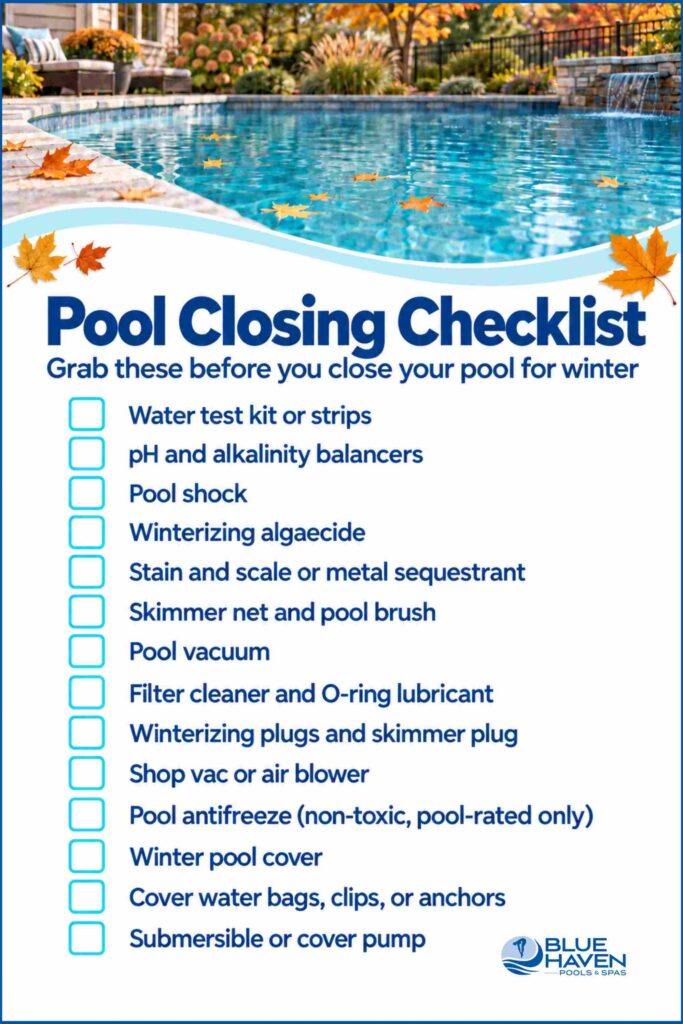
Your Pool Closing Supply Checklist
Gather everything before you start so you’re not running to the store halfway through:
- Water test kit or strips
- pH and alkalinity balancers
- Pool shock
- Winterizing algaecide
- Stain and scale or metal sequestrant
- Skimmer net and pool brush
- Pool vacuum
- Filter cleaner and O-ring lubricant
- Winterizing plugs and skimmer plug
- Shop vac or air blower
- Pool antifreeze (non-toxic, pool-rated only)
- Winter pool cover
- Cover water bags, clips, or anchors
- Submersible or cover pump
Save this list on Pinterest
How to Close Your Pool for Winter in 8 Steps
Step 1: Balance Your Water (About a Week Before)
Test your water and aim for:
- pH: 7.4 to 7.6
- Total alkalinity: 80 to 120 ppm
- Calcium hardness: 200 to 400 ppm
Balanced water protects your surfaces and equipment from stains and scale all winter long.
Step 2: Deep Clean the Pool
Skim the leaves, brush the walls and floor, and vacuum. Anything left in the pool now will sit there for months, so give it a proper goodbye.
Step 3: Shock It
Add shock, preferably at dusk, and run the pump so it circulates. This knocks out bacteria and anything else hanging around.
Step 4: Add Winterizing Algaecide
Wait until chlorine drops to around 3 ppm or below, then add algaecide. High chlorine can break it down, so a little patience pays off.
Step 5: Lower the Water Level
rop the water below the skimmer (usually 4 to 6 inches below it, but follow your cover’s instructions). Never drain your pool completely. Groundwater pressure can damage or even lift an empty pool.
Step 6: Blow Out and Plug the Lines
This is the step that protects your plumbing. Blow the water out of the lines, then plug the returns and skimmer. In freezing climates, add pool antifreeze to the lines as an extra layer of protection.
Step 7: Winterize Your Equipment
Drain the pump, filter, and chlorinator, and remove the drain plugs so no water freezes inside. Clean or backwash the filter first. If you have a gas pool heater, turn off the power and gas, then drain it. Hayward heater owners can find model-specific winterizing steps in the owner’s manual or at Hayward.com.
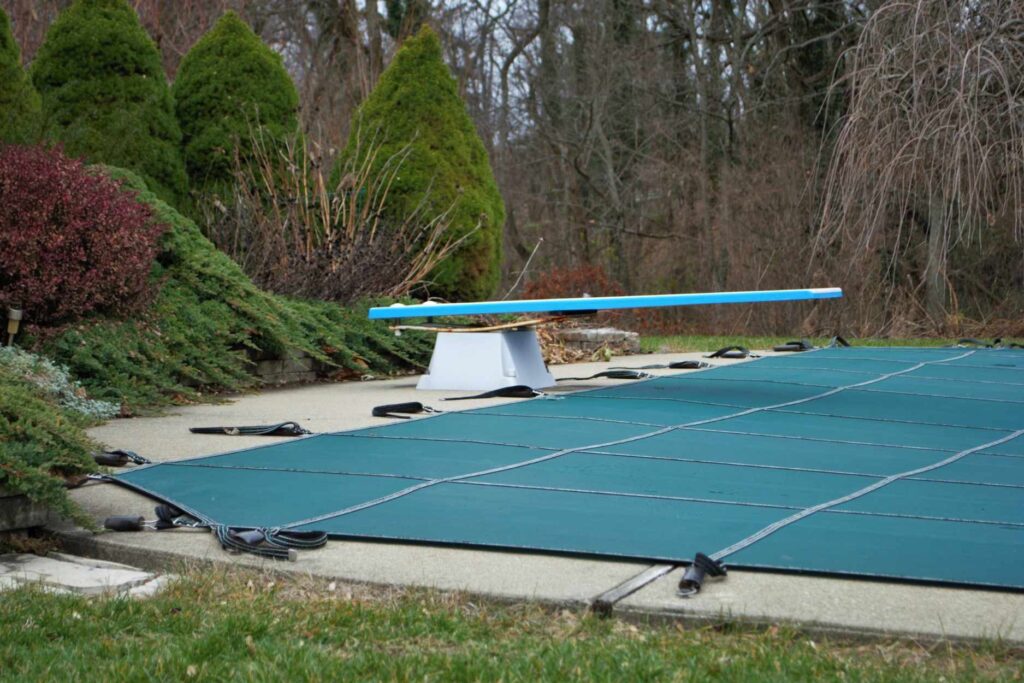
Step 8: Put the Cover On
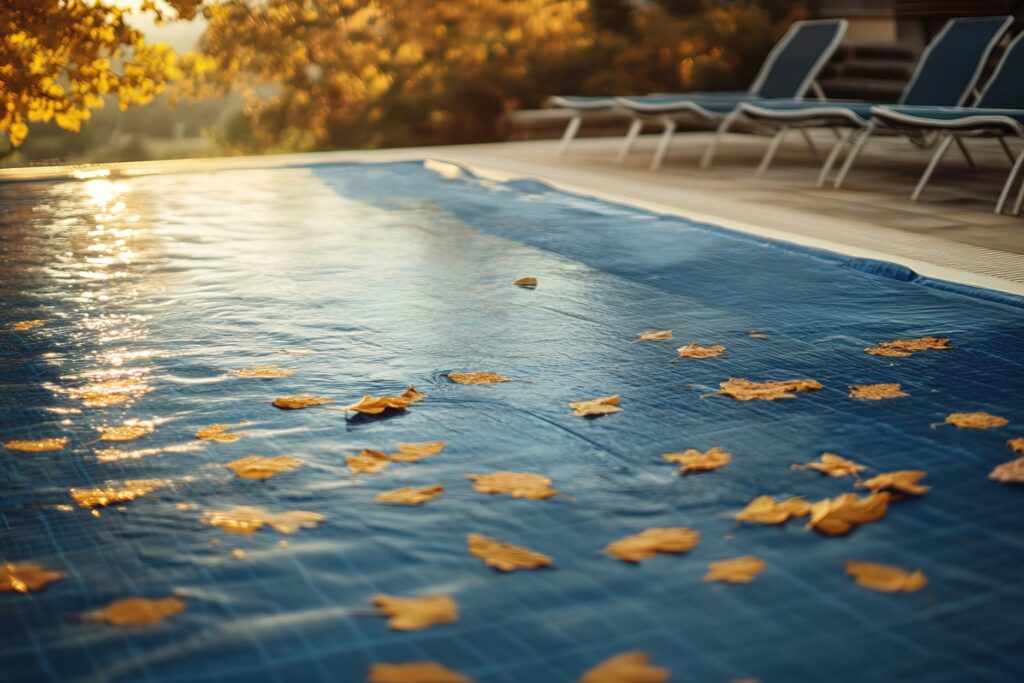
Remove ladders, rails, and skimmer baskets, then secure your winter cover tightly. A safety cover is the best choice if you have kids or pets. Check it a few times over the winter and clear off standing water or heavy snow.
Pool Closing Mistakes to Avoid
- Closing too early. Warm water plus a cover equals algae.
- Skipping the line blowout. Frozen water expands and cracks pipes. That’s an expensive spring surprise.
- Using car antifreeze. It’s toxic. Only use pool-rated antifreeze.
- Draining the pool all the way. Lower the water level, don’t empty it.
- Forgetting the cover check. Standing water on a cover can stretch or tear it.
Pool Closing FAQs
Can I leave my pool open all winter?
In warm climates like Texas, Florida, Arizona, and Southern California, yes. A winter cover, heater, or enclosure can help you swim even longer. Keep the pump running and the chemistry balanced. In freezing climates, an open pool puts your plumbing and equipment at risk.
How long does it take to close a pool?
Most pools take 3 to 5 hours on closing day, plus the water balancing you do about a week before.
What happens if I don’t winterize my pool?
Water left in pipes and equipment can freeze and crack them. Unbalanced water can also stain surfaces and turn green by spring.
Should I close my hot tub or spa too?
Many spa owners keep their spa running all winter since the water stays heated. Here’s how to use your spa safely in winter. If you won’t use it, it needs to be fully drained and dried to prevent freeze damage.
Ready for a Crystal-Clear Spring?
When you close your pool for winter the right way, opening day in spring goes from “ugh” to “let’s swim.” Want to hand it off completely? The Blue Haven team is here to help. Contact our team and we’ll help keep your backyard oasis protected until swim season comes back.