
A pool heat pump can cut your heating costs in half, or it can leave you standing on the deck at 68 degrees wondering why nothing is happening. Which one you get depends on three things: where you live, whether you have a spa, and how far ahead you plan your swims. Answer those and the choice makes itself. Here is the whole decision in about two minutes.
How a pool heat pump actually works
A pool heat pump does not burn anything. It runs on electricity, but the electricity is not what heats your water. The unit pulls warmth out of the air around it and moves that warmth into your pool, which is why it can put out more heat than the energy it uses.
That gets measured as COP, or coefficient of performance. Most pool heat pumps land between 3.0 and 7.0, meaning every unit of electricity produces three to seven units of heat. A high-end gas pool heater tops out around 84 percent efficient, so it is actually wasting 16 percent of what you pay for. The Hayward units we install print the COP right on the spec sheet, so you can compare models without doing math homework.
What a pool heat pump costs, up front and forever
Here is the trade. A gas heater costs about 25 to 30 percent less to buy, which is real money on day one. A pool heat pump costs more up front, lasts longer, and then quietly wins on the monthly bill. If you are heating year round, a gas heater can run up to twice the operating cost of a heat pump.
So the question is not which one is cheaper. It is how many years you plan to own the pool, and how often you actually turn the heat on.
The catch: pool heat pumps are slow
Efficient does not mean fast. A pool heat pump is excellent at holding your water at 85 degrees once it gets there. Getting there is the slow part, and we are talking hours, not minutes.
If your family swims on a plan, that is fine. Set it and forget it. If your swims happen because somebody walked past the window and said “let’s get in,” a gas heater will beat a heat pump to temperature every single time. You will pay more to run it. You will also actually get in the water.
Have a spa? Skip the heat pump
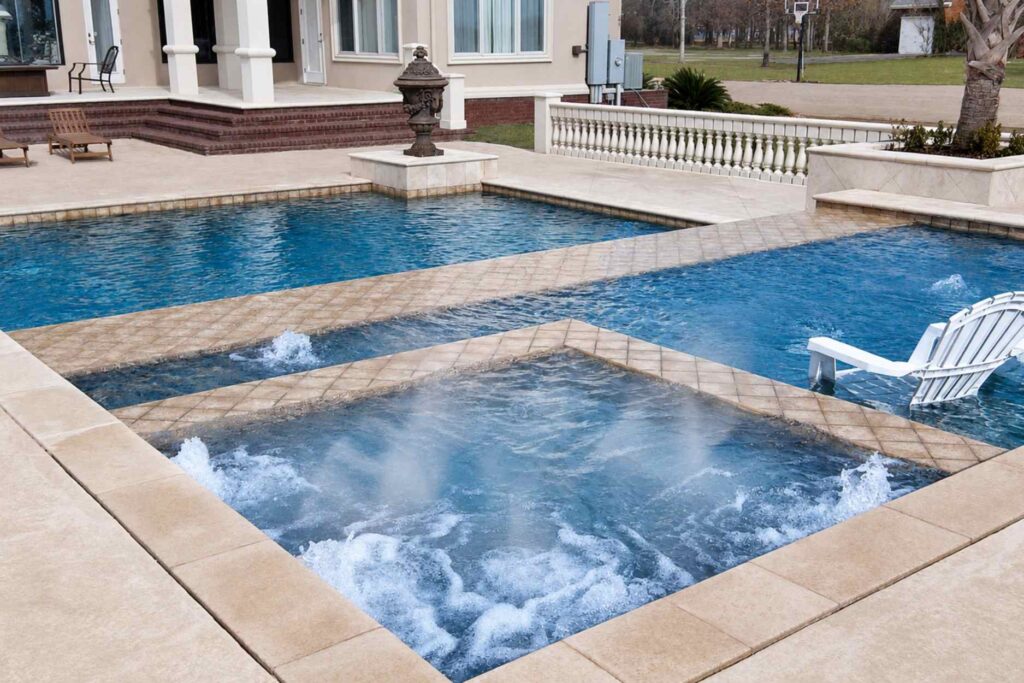
This one is not a judgment call. Spas need higher temperatures and they need them now, and a pool heat pump cannot deliver either. If your pool has an attached spa, go gas. Otherwise you will be scheduling your hot soaks three hours in advance, which defeats the entire point of owning one.
Where a pool heat pump works, and where it does not
A pool heat pump pulls heat out of the air, so the air has to cooperate. It needs winter temperatures that stay around 45 degrees or higher, plus some humidity to work with.
Good fit
Mild, humid winters. Think Alabama, California, Florida, Georgia, Louisiana, Mississippi, and Texas. Also solid in the Northeast and Midwest if you only swim spring through summer, because that is exactly when the warm air a heat pump needs is sitting right there.
Bad fit
Hot but bone dry. Arizona and Nevada look like heat pump country and are not, because the air holds too little moisture for the unit to work efficiently. Also skip it anywhere you want winter swimming in genuinely cold air.
Still not sure? Here is the 10-second version
Spa on the pool, or spontaneous swimmers: gas heater. Mild humid climate, predictable swim schedule, and you plan to keep the pool a long while: pool heat pump. Everything in between is worth one conversation.
Tell us your zip code and how you actually use your pool, and we will tell you which heater makes sense, including the one that costs us less to sell you. Get a free heating consultation.