
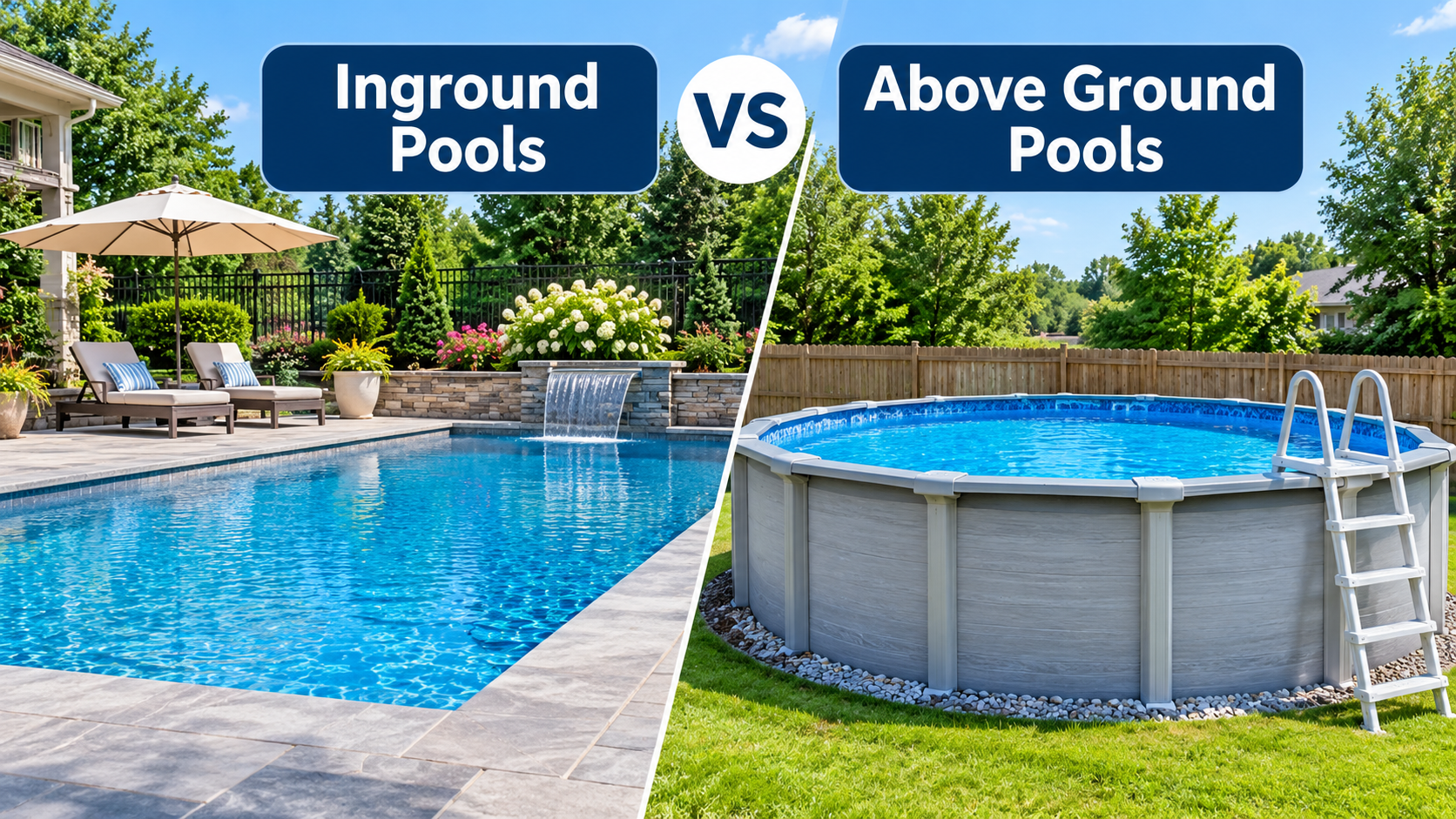
If you are trying to decide between an inground and an above ground pool, here is the short version. An above ground pool costs much less upfront and can be set up in a few days. An inground pool costs several times more, takes weeks to build, but lasts longer, fits your yard more closely, and usually adds more value to the home. The right pick depends on how long you plan to stay, how much you want to spend each year, and how you plan to use the pool.
Below we break down the real numbers, explain what the price ranges mean, and help you figure out which option fits your backyard.
Quick Answer: Which Pool Is Better?
- Choose an above ground pool if your budget is under about $15,000, you may move within 5 to 7 years, or you just want to test whether you enjoy having a pool.
- Choose an inground pool if you plan to stay in your home for 10 years or more, want a pool that looks like part of the house, or want to add a spa, lighting, or a custom shape.
- Choose a gunite inground pool if you want the most durable and custom option. Gunite is the most expensive inground style, but it lasts the longest and can be built into almost any shape.
What Is an Above Ground Pool?
An above ground pool sits on top of the ground instead of being dug into it. The walls are made from steel, resin, or a soft-sided frame, and a vinyl liner holds the water. Most are about 4 feet deep, which is shallow for diving but fine for swimming, playing, and cooling off.
Pros of Above Ground Pools
- Lower upfront cost
- Quick installation, often done in one to three days
- Usually fewer permit requirements (rules vary by city and county, so check)
- Can be moved or taken down if you relocate
- Good for renters, short-term homes, or families with young kids
Cons of Above Ground Pools
- Shorter lifespan, with liners often needing replacement every 5 to 10 years
- Limited depth and shape, which means less room for diving or lap swimming
- Does not usually add resale value
- Less attractive from the house and yard, unless you add a deck or fencing
- Can feel less stable in strong wind, and walls may bow over time if the ground is uneven
What Is an Inground Pool?
An inground pool is built into a dug-out space in your yard. It can be made from three main materials, and each one has its own price and lifespan.
- Vinyl liner pools: The cheapest inground option. The walls are steel or polymer, and a vinyl liner lines the water. The liner usually needs replacing every 6 to 10 years.
- Fiberglass pools: A pre-made shell is set into the ground in one piece. Installation is faster, and the surface is smooth and low maintenance. Shape choices are limited to what the manufacturer offers.
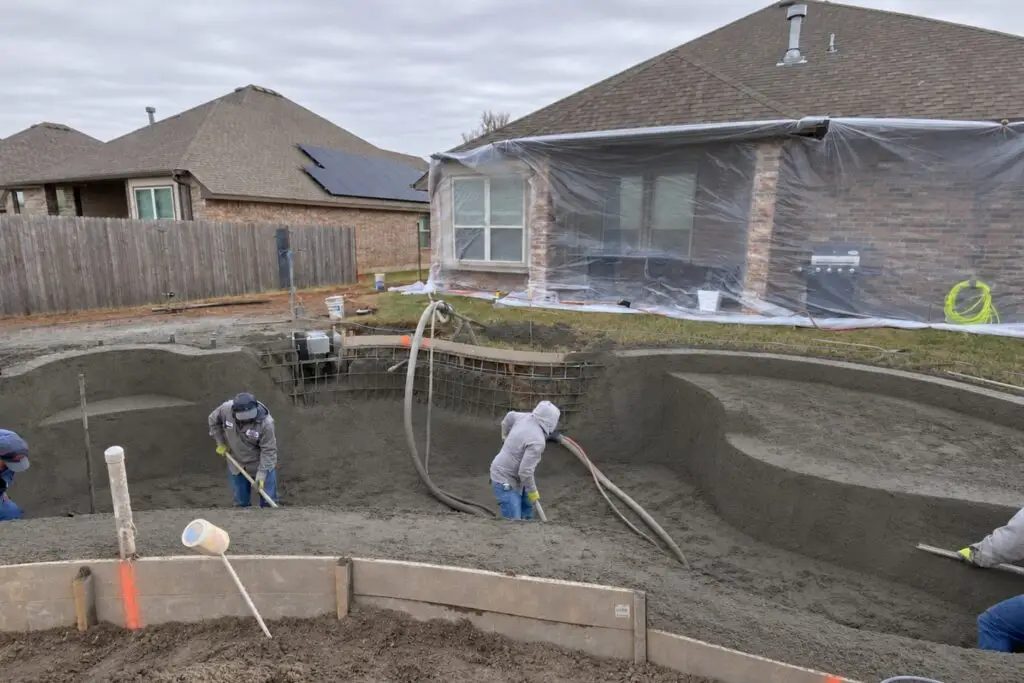
- Gunite or concrete pools: Built on site with steel reinforcement and sprayed concrete. This is the most customizable option, and with proper care it can last 30 years or more.
Pros of Inground Pools
- Longer lifespan, especially with gunite
- Custom shapes, depths, spas, and features like tanning ledges or waterfalls
- Better looks and better value for resale in many markets
- Can be designed for lap swimming, diving, or family play
- Feels like a permanent part of the home
Cons of Inground Pools
- Much higher upfront cost
- Longer build time, often 8 to 14 weeks after construction starts
- Permits, inspections, and site work are required
- Higher yearly running cost, including chemicals, electricity, and repairs
- Harder and costlier to remove if you want the yard back
Inground vs Above Ground: Side by Side
| Factor | Above Ground Pool | Inground Pool |
|---|---|---|
| Typical total cost | About $1,500 to $15,000 | About $35,000 to $120,000+ |
| Installation time | 1 to 3 days | 8 to 14 weeks (build only) |
| Expected lifespan | About 10 to 20 years (liner replaced in 5 to 10) | 15 to 30+ years, longer for gunite |
| Yearly running cost | About $700 to $2,200 | About $1,200 to $5,000 |
| Permits | Often not required, but check locally | Almost always required |
| Customization | Limited | High, especially gunite |
| Resale value | Usually little to none | Can add value in many markets |
| Best for | Budget buyers, renters, short stays | Long-term homeowners, custom designs |
How Much Do Pools Cost in 2026?
Pool prices vary a lot, so we checked several recent cost guides before writing these numbers. You will see different figures from different websites. Some sources list the above ground price as $1,500 to $15,000, while others list kit-only prices from $1,000 to $6,000. For inground pools, the national average is reported around $50,000 to $52,000, with basic vinyl pools starting near $35,000 and gunite pools reaching $60,000 to $120,000 or more.
Treat every number here as a range, not a quote. Your final price depends on your location, soil, access, design, and the features you pick.
Above Ground Pool Costs
| Type | Typical Cost | Notes |
|---|---|---|
| Inflatable or soft-sided | $200 to $1,500 | Good for kids, short-term use |
| Steel or resin frame | $1,000 to $6,000 | The most common choice |
| High-end hard-sided | $5,000 to $12,000+ | Larger, more durable, more features |
| Installed with deck or fencing | $3,000 to $15,000+ | Real cost once you add extras |
Inground Pool Costs
| Type | Typical Cost | Notes |
|---|---|---|
| Vinyl liner | $35,000 to $65,000 | Lower cost, liner replacement needed |
| Fiberglass | $45,000 to $85,000 | Fast install, fixed shapes |
| Gunite or concrete | $60,000 to $120,000+ | Most custom, longest lasting |
Blue Haven lists its inground pool pricing in the $60,000 to $100,000+ range for most gunite projects. You can see the full breakdown on the Blue Haven pool pricing page.
Is the Inground Price Actually Good?
This is the question most readers want answered, so here is our honest take. A gunite pool at $60,000 to $100,000 is in line with what the market charges for a custom, long-lasting build. It is not the cheapest option, and a vinyl pool at $35,000 can save money upfront. But vinyl pools need a liner replacement roughly every decade, and that cost usually lands between $3,000 and $7,000 each time. Over 20 years, the gap between a vinyl pool and a gunite pool narrows more than most people expect.
Here is a simple way to think about it:
- Above ground: $5,000 upfront, plus about $1,000 per year in upkeep, plus a likely replacement after 8 to 10 years. Cost per year over a decade is roughly $1,500 to $1,700.
- Vinyl inground: $45,000 upfront, plus about $2,000 per year, plus one liner replacement. Cost per year over a decade is roughly $6,500.
- Gunite inground: $80,000 upfront, plus about $2,000 per year, and few major repairs for decades. Cost per year over a decade is roughly $10,000, but it drops sharply after year 20.
The numbers show that above ground is clearly the cheapest per year, but only if you plan to move or replace it. If you plan to live in the home for 15 years or more, the inground price starts to look more reasonable, especially if the pool adds resale value.
Hidden Costs to Plan For
Many buyers forget the costs that come after the pool is built. Budget for these:
- Fencing and safety covers, which many cities require for inground pools
- Electrical work for pumps, lights, and heaters
- Decking and landscaping, which can add $5,000 to $20,000 depending on size
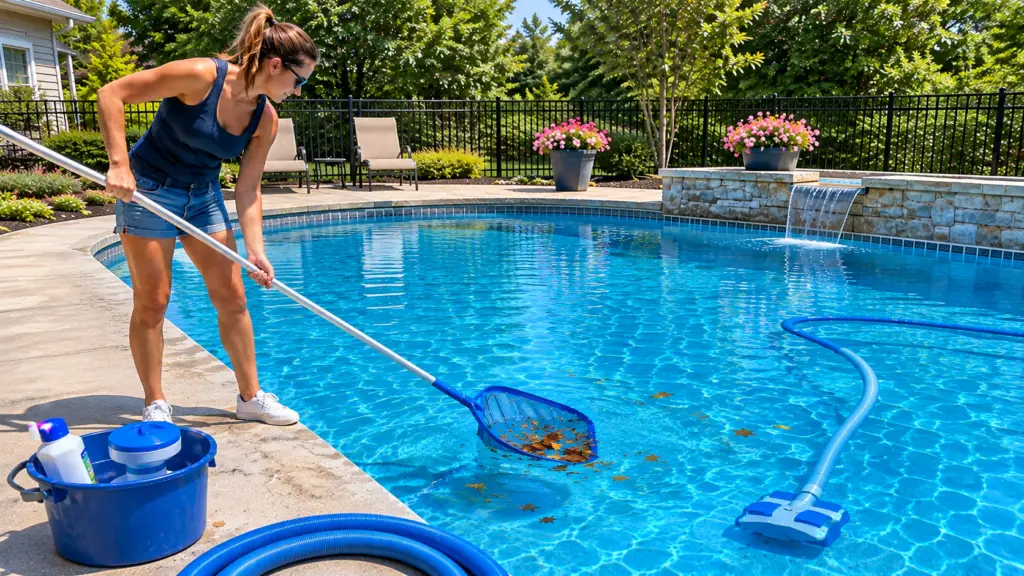
- Chemicals, filters, and water, which add up every season
- Winterizing and opening the pool each year
- Repair funds, often $500 to $1,000 per year for above ground and more for inground
Lifespan, Resale, and Permits
Lifespan matters because a pool that lasts 25 years spreads its cost over a longer period. Above ground pools usually last 10 to 20 years, but the liner often needs replacing first. Inground vinyl pools last about the same, while gunite pools can last 30 years or more with normal care.
Resale is where many people get surprised. Above ground pools generally do not add value to a home, and some buyers see them as a cost to remove. Inground pools can add value, although the effect depends on your local market, the quality of the build, and how the pool looks. A licensed local appraiser or real estate agent can tell you what works in your area.
Permits are another difference. Most inground pools need permits, inspections, and proof that the build meets local code. Above ground pools are often exempt, but some cities still require fencing or a simple permit. Always check your local building department before you buy.
Which Pool Fits Your Backyard?
Think about these questions before you choose:
- How long will you live in this home?
- What is your total budget, including extras?
- Do you want the pool to look like part of the house, or is a simple setup fine?
- Do you plan to swim laps, dive, or mostly play with kids?
- Is your yard flat, sloped, or small?
- Do you want a spa, lights, or water features?
If your answers point to a long stay and a custom look, an inground pool is usually the better investment. If you need something fast, cheap, and flexible, above ground is the practical choice. Many people also pick a semi-inground pool, which sits partly in the ground and combines some benefits of both.
How Blue Haven Helps You Build Your Inground Pool
Blue Haven Pools and Spas focuses on custom inground gunite pools, and that focus is why we can help you plan the project from the first sketch to the first swim.
- Over 70 years of experience: Blue Haven has been building pools for more than seven decades, which means a tested process and fewer surprises during construction.
- Nationwide reach: With more than 300,000 pools built and 60+ U.S. offices, Blue Haven serves homeowners across the country with local teams who know local codes and soil conditions.
- Custom design for your lifestyle: Instead of picking from a catalog, you choose a design based on how you want to use the backyard. Options include Family, Entertain, Retreat, Active, Courtyard, and Estate styles.
- Clear financing: Blue Haven offers financing for qualified buyers, so you can compare a monthly payment against your long-term budget. Learn more on the financing page.
- Remodels and upgrades: If you already have an older pool, Blue Haven can help with inground pool remodeling and renovations instead of a full rebuild.
- Smart pool equipment: Modern pool systems can be managed from your phone. See the SmartFeatures pool equipment page for details.
- Trusted reviews: Blue Haven reports a 4.8 out of 5 rating from more than 10,000 verified reviews across Trustpilot, Yelp, and Google.
If you want to see real builds before you decide, visit the Blue Haven inspiration gallery or read stories on the Blue Haven blog. You can also check the locations page to find the office closest to you, or get a free quote to start your design.
Common Questions People Ask About Pools
Many people search for answers to these questions before they decide. We cover the most useful ones below, and you can also read our FAQ.
- Is an above ground pool worth it?
- How long does an inground pool take to build?
- Do I need a permit for a pool?
- Can an above ground pool be put in the ground later?
- Which pool type lasts the longest?
- Does a pool add value to my house?
- What is the cheapest way to get a pool?
- Is a gunite pool worth the money?
Frequently Asked Questions
Is an above ground pool cheaper than an inground pool?
Yes. Above ground pools cost far less upfront, often a few thousand dollars to about $15,000 installed. Inground pools usually start around $35,000 and can go over $100,000 for custom gunite builds.
How long does it take to build an inground pool?
Most inground pools take about 8 to 14 weeks once construction begins. Design, permitting, and site preparation take extra time, so plan ahead. Blue Haven states that some projects can be finished in as little as 70 days.
Do I need a permit to build a pool?
For most inground pools, yes. You will need permits, inspections, and code compliance. Above ground pools are often exempt, but rules vary, so check your local building department.
Which is better, gunite or vinyl?
Gunite is better for long-term durability and custom design. Vinyl is better if you want a lower upfront cost and do not mind replacing the liner every several years.
Can you move an above ground pool?
Yes, that is one of its main advantages. You can take it down and set it up again somewhere else, although the liner and parts may need replacing.
Does an inground pool add value to a home?
It can, depending on your market and the quality of the build. Ask a local real estate agent or appraiser for guidance on what buyers in your area expect.
What is the yearly cost of owning a pool?
Above ground pools usually cost around $700 to $2,200 per year. Inground pools often cost $1,200 to $5,000 per year, depending on whether you hire service, your climate, and equipment quality.
Can you convert an above ground pool to an inground pool?
Not easily. The walls and base are not designed to be dug into the ground, so most homeowners choose to build a new inground pool instead.
What affects the cost of an inground pool the most?
Size, depth, materials, spas, lighting, water features, and site conditions all matter. Steep yards, rocky soil, and hard-to-reach backyards add cost.
Is financing available for pools?
Blue Haven offers 100% financing for qualified buyers. Terms depend on credit and approval, so visit the financing page for current details.
Next Steps
Start by deciding how long you plan to stay in your home and what your yearly budget looks like. If you are leaning toward a long-term, custom pool, get your free design from Blue Haven and see how the numbers fit your backyard. If you want to explore cheaper or temporary options, compare the costs in this article first, then decide what works for your family.